

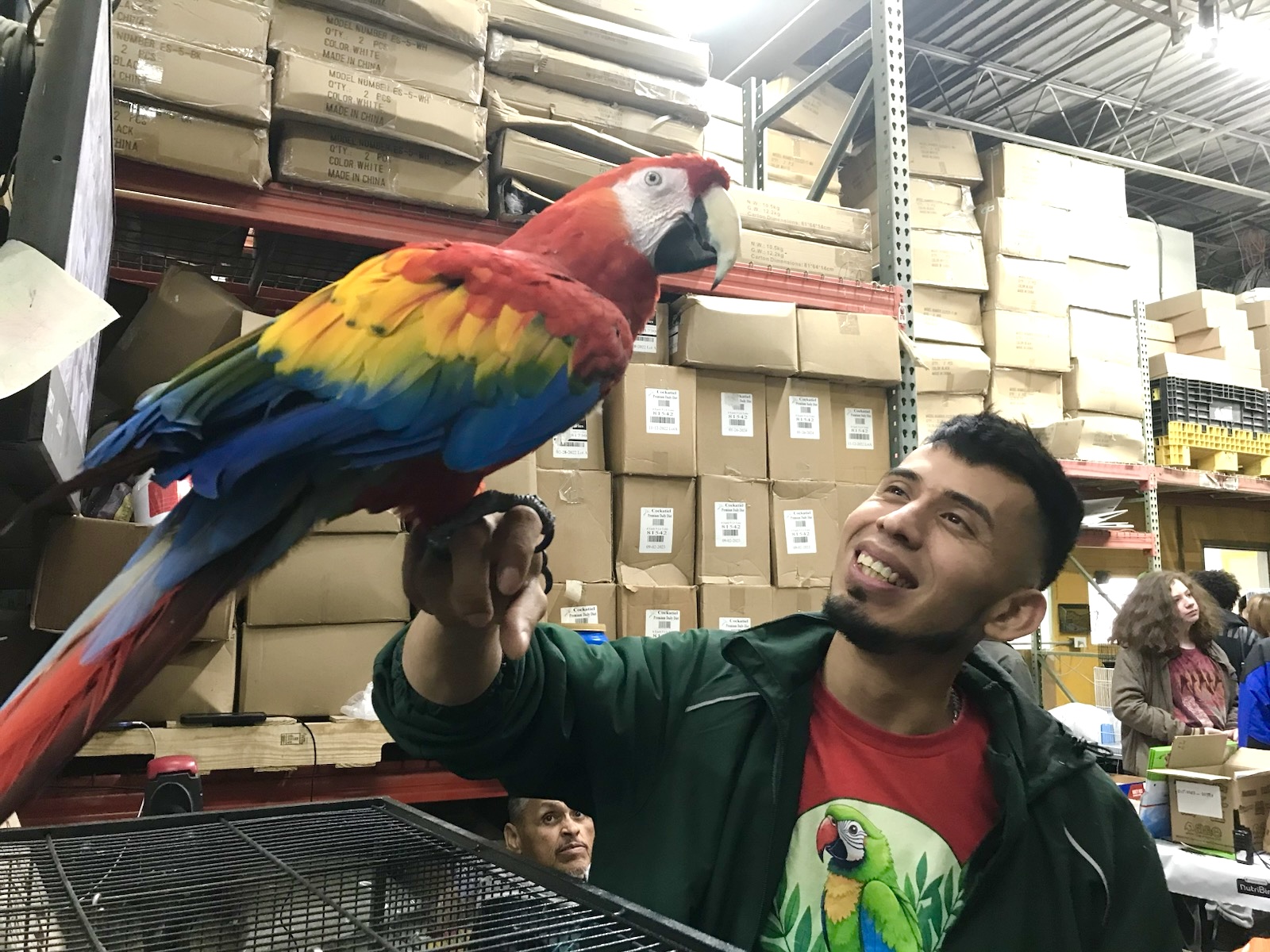
Atwitter Over the New York Bird Expo.
Brooklynites.NYC was all atwitter over the New York Bird Expo at New York Bird Supply earlier this May. Each year, the New York Bird Supply hosts this annual avian celebration, and it keeps getting better. Dust off your tail feathers—this event is a showstopper.
Atwitter over the New York Bird Expo.
Approaching the New York Bird Supply on Rombouts Avenue in the Bronx, one might feel unsure of what to expect. The local scenery is fairly plain and unassuming, but don’t let that fool you: inside lies a feathery, colorful world of avian wonder. As we approached the New York Bird Expo, workers hauled towers of bird cages stacked with pastel‑colored birds flitting about their enclosures, chirping and tweeting excitedly. When you walk through the entrance, you’re greeted by breeders standing proudly with parrots perched on their shoulders.
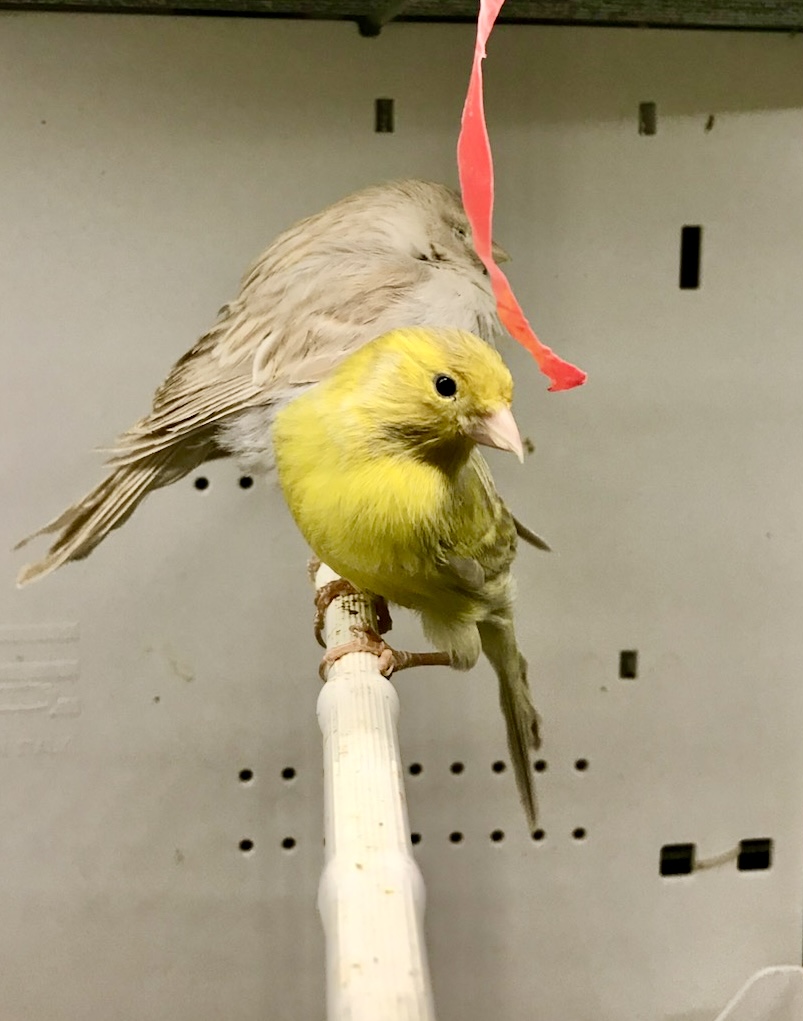
Upon entering, you’re met with a cacophony of tweets and wild calls that evoke an Amazonian jungle more than a Bronx warehouse. As you peruse the stands, you’re treated to a menagerie of exotic birds. There are the star attractions: macaws, green‑cheeked conures, lovebirds, cockatiels, and cockatoos. There are also finches of every stripe—zebra finches, owl finches, Gouldian finches, green‑singer finches—and a host of canaries and softbills such as tanagers. You can see baby parrots in their incubators, still without their adult plumage. The bird breeders are all friendly and eager to answer your questions. These are just a few of the reasons we’re atwitter over the New York Bird Expo.
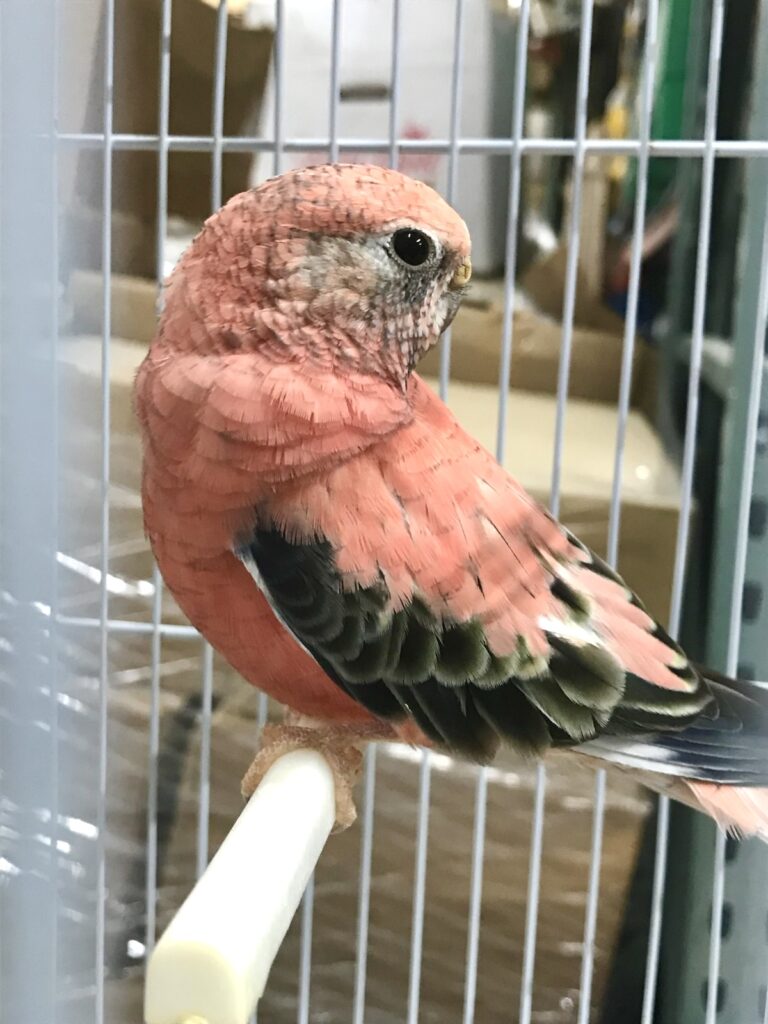
The Labors of Bird Breeding.
Bird breeding is a precise and demanding process. The environment must be just right. First, a compatible pair must be established—birds have to get along before breeding is even possible. Once successfully bonded, they’re primed for mating with a protein‑ and calcium‑rich diet. In the wild, birds would build their own nests from collected materials, choosing the perfect location. Breeders must instead place the breeding cage in a quiet, calm, draft‑free spot and provide suitable nesting materials.
Parrot breeding is at the extreme end of bird husbandry. Parrots are even more finicky than other birds, which are already high‑maintenance. Getting them to breed successfully can take years, and even then it often doesn’t happen. When a pair does reproduce, that’s only the beginning. Once the eggs hatch, the breeder essentially becomes a stand‑in parent, keeping the chicks on a frequent feeding schedule for the first few months.This intense, time‑consuming work is why parrots can cost as much as $3,000—a pretty penny. The expense reflects the long hours of mating, incubation, and hand‑rearing required. It’s how breeders can break even, often, just barely.
A Charm of Finches
A flock of finches is called a charm. Isn’t that the most adorable word for a group of birds? The poetic term comes from Old English for their constant, twittering singsong they make when gathered together. Finches are highly social, small to medium‑sized songbirds with conical beaks built for cracking seeds. There are over 50 wild species in North America alone. Some breeds, like the society finch, sport earthy brown and white plumage, while others, like the Gouldian finch, burst with patches of red, yellow, green, and purple.
There are more than 200 species of finch worldwide, indigenous to every continent except the Arctic and Australia. Even New York City has a few of its own: the house finch, American goldfinch, purple finch, and Cassin’s finch. All have been spotted in Central Park and Prospect Park, brightening the city with their plumage and song.
The History of parrots as pets.
Parrots hail from Central and South America, Africa, India, and Australia. People have kept them as pets for thousands of years. In ancient Mesoamerica, Egypt, and Mesopotamia, parrots were seen as exotic companions and status symbols among royal elites.
Admiration for these intelligent, striking birds spans oceans and eras.
Evidence suggests parrots were kept as pets as far back as 5,000 years ago in Brazil. Alexander the Great is often credited with introducing ring‑necked parakeets to Europe around 327 BC. Henry VIII reportedly owned an African grey parrot in 1504, making it one of the earliest recorded pet parrots in the British Isles.
There are roughly 350 parrot species worldwide, renowned for their intensely colorful feathers and intelligence. They are among the few animals that can mimic human speech—especially fascinating given that parrots lack vocal cords. Instead, they produce sound by controlling airflow through their throat and syrinx. Some parrot species are only a few inches long, while the largest macaws can stretch to three feet. Many parrots live 75 years or more, forming lifelong bonds with their human (or avian) companions.
Did you know there’s a thriving population of wild parrots in New York City? It’s still not clear how they got here, but one popular story holds that in the 1960s a shipment of monk parakeets destined for a bird sale escaped. They adapted surprisingly well to life in the concrete jungle.
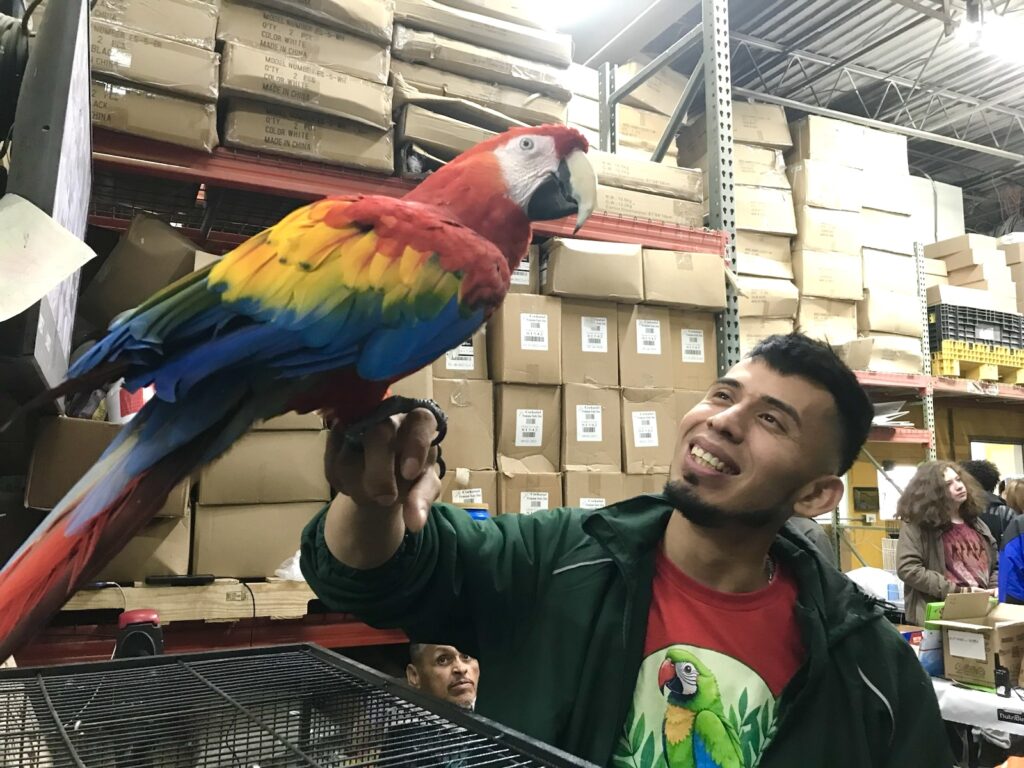
You’ll be atwitter over the New York Bird Expo too when it returns in 2027.
There’s simply nothing else like it in New York City. Seeing and hearing the crowd of birds brings joy to the senses. The vendors pour care and attention into their work, and you can see it on their faces and in the way they interact with visitors and their birds.
The New York Bird Supply is also a fine store to pick up food and supplies for your own pet bird once you return home. If you love birds, Brooklynites.NYC is already atwitter over the 2027 New York Bird Expo—and you probably will be too.
Thank you for reading. Click back soon!
Read our review of Jimmy and the Demons:
https://brooklynites.nyc/art-is-serious-play/
Read our review of the Case for the Sexual Cosmos:
https://brooklynites.nyc/art-is-serious-play/
Sources: