
Bridging the Gap.
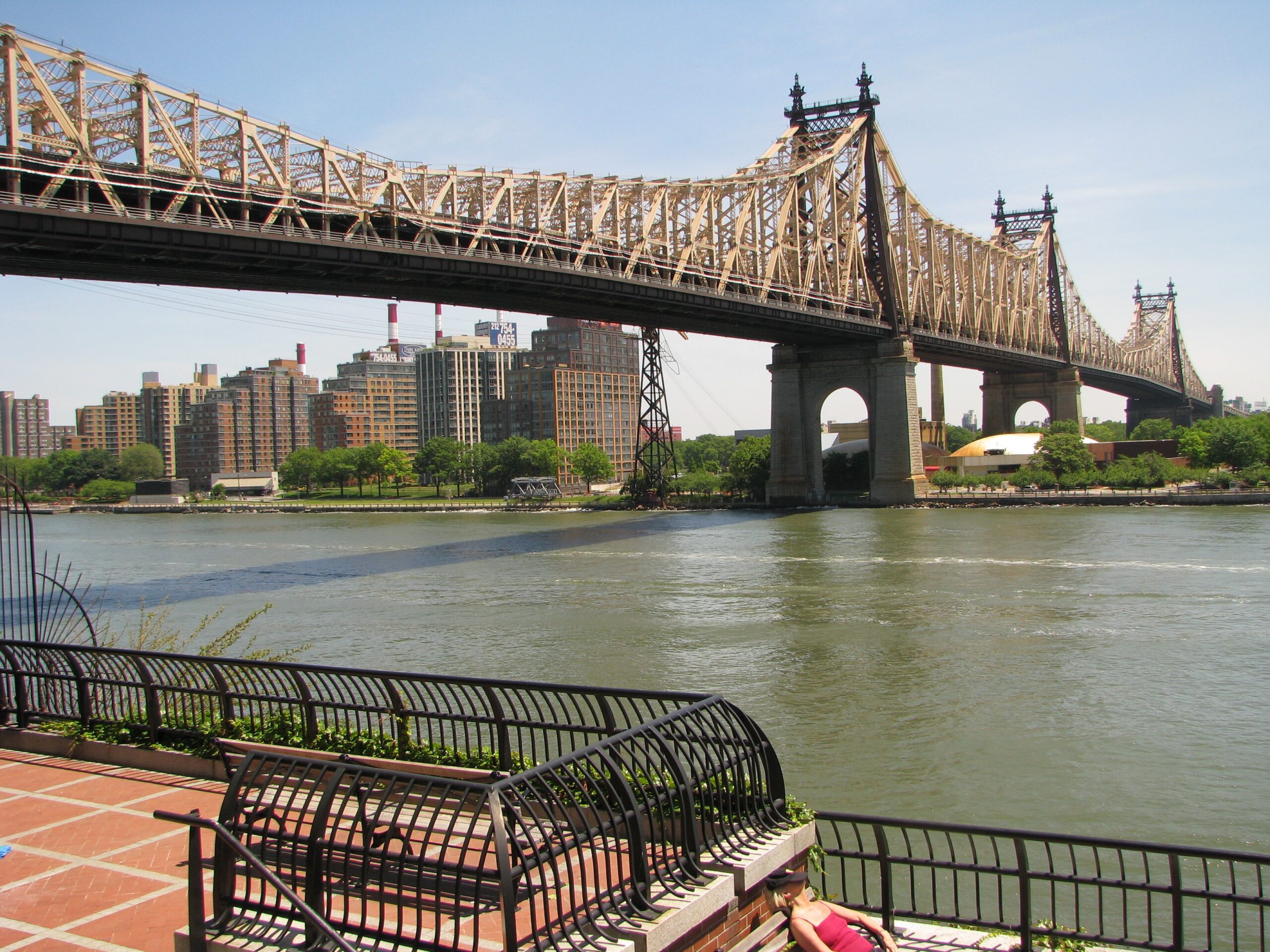
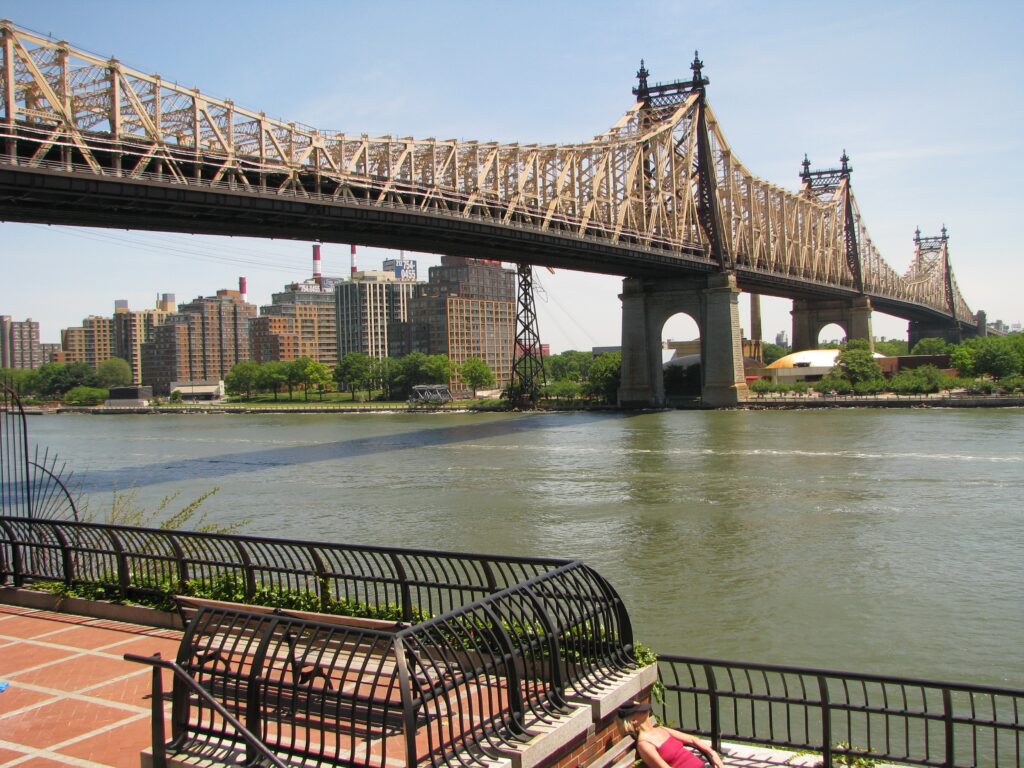
There is a move underway at City Hall to strip Ed Koch’s name from the Queensboro Bridge, and the argument behind it is simple enough: Koch failed New Yorkers during the AIDS crisis, so Koch does not deserve a bridge. Mayor Mamdani proposed the idea on a questionnaire while campaigning; a comptroller, a public advocate, and more than a dozen council members have signed on or said they would consider it. Bridging the gap between Koch’s failures and successes is the only wise solution for New Yorkers.
The Koch Bridge Fight Mistakes a Tragedy for a Crime.
We are not here to defend dead mayors. But the case for renaming rests on a claim that does not survive scrutiny— the claim that honoring Koch means honoring bigotry. It does not. What Koch’s AIDS record actually represents is something harder to boil down, and far more important to get right: the difference between a man who hated and a man who was unsure. There is a world of difference between the two. Bridging the gap is the only reasonable option for New York City.
Was Koch a Bigot?
If you came to the Koch story cold, you’d assume the man whose bridge activists want erased was an ardent enemy of gay New Yorkers. The opposite is closer to the truth.
Koch built one of the strongest pro-gay-rights records of his era. As a congressman in 1974, he co-sponsored federal legislation to add sexual orientation to the Civil Rights Act — a fringe position at the time. In 1978, he signed an executive order barring discrimination on the basis of sexual orientation across city government, reviving a protection his predecessor had let lapse. By1984 he became the first mayor to march in the Pride parade, and more than a dozen of his commissioners marched with him. In 1986 he testified for and signed the city’s landmark Gay Rights Ordinance, which extended anti-discrimination protections to housing, employment, and public accommodations after fifteen years of failed attempts in the Council — then vetoed an amendment that would have weakened it. He sold the West Village building that became the LGBT Community Center to the community at a steep discount.
The biographical irony is now a matter of public record: in 2022, the New York Times confirmed through close confidants what Larry Kramer had spent decades alleging — that Koch was himself a closeted gay man, whose only known long-term relationship ended around the time he was elected. Charles Kaiser, a friend of Koch’s, has argued that no politician of his generation compiled a longer pro-gay-rights record. Whatever Koch was, “anti-gay bigot” is a label that carries no weight.
This matters because the renaming campaign borrows its moral energy from the language of bigotry — erasure, slap in the face, justice for the dead. That language assumes animus. And there was no animus. There was something else.
Koch’s Mishandling of the AIDS Crisis.
The failure was real, and naming it honestly is the only way the rest of the argument earns trust.
AIDS surfaced in New York in 1981, on Koch’s watch, in the city that became the epicenter of the AIDS epidemic. The gay community asked City Hall to act immediately. It took roughly twenty-one months for the Gay Men’s Health Crisis to secure even an inconclusive meeting with the mayor. Koch created an Office of Gay and Lesbian Health Concerns in 1983 — useful work, but nothing like the coordinated municipal emergency response the moment demanded. AIDS education did not reach city schools in any serious form until 1987, and the comprehensive program with condom availability arrived only in 1991, under his successor David Dinkins. By the time Koch took what critics consider his first real action, the disease had already killed thousands of New Yorkers.
Comparisons did him no favors. San Francisco, under Dianne Feinstein, mounted a faster and more aggressive public-health response, and the filmmaker David France and others have argued that New York’s heavier toll owed something to that gap in leadership. Koch’s most ferocious critic, Larry Kramer, never softened: he accused Koch of being effectively complicit in the deaths of gay people. Even allowing for the fury of a man burying his friends, the underlying indictment — that the mayor of the hardest-hit city in America was slow, tentative, and inadequate when speed and force were everything — is fair, and Koch never fully answered it.
Bridging the Gap Between Malice and Negligence.
Here is the question the renaming campaign skips, and the one that should decide the matter: why did Koch fail?
The most popular explanation is that a closeted mayor buried the crisis out of shame. It is dramatically satisfying and probably wrong. As critics have noted, a man hiding his sexuality through hostility to gay causes does not spend fifteen years amassing a pro-gay-rights record and marching at the front of the Pride parade. The closet may have made him cautious, but it does not explain the pattern.
Archives Suggest a Banal, Damning Answer
Records from Koch’s own files indicate he was initially uninterested, and then reluctant — not because he hated the dying, but he did not want to spend the money an adequate response required. New York in those years was clawing its way back from near-bankruptcy; austerity was the governing religion, and Koch was its most disciplined practitioner. Add the genuine scientific fog of the early years — the virus was not even identified until late 1983, and no one fully understood transmission — and you get the real shape of the failure: cowardice and miserliness braided together with confusion, at the precise moment that courage was the only thing that would have helped.
That is a moral failure. It is not a hate crime. And the distinction is not Koch’s alibi — it is the public’s interest. A polity that cannot tell the difference between a leader who targets a group and a leader who fails one has lost a tool it badly needs, because almost every consequential failure of government is a failure of nerve, money, or attention, not of hatred. If we treat negligence as though it were malice, we lose the ability to say the obvious and necessary thing about Koch: he did real harm, he is culpable for it, and he was not a bigot. All three are true at once. A bridge plaque is a blunt instrument; it cannot hold all three. A city’s memory can, if the city chooses to do the work by bridging the gap between a flawed man and his ideals.
What Gets Erased Along With the Name.
The last question is the practical one. Is a 12-year mayoralty, and the survival of New York City, fairly reduced to its worst chapter?
Consider what the name on that bridge actually stands for. Koch inherited a city in 1978 that was bankrupt, burning, and emptying out — abandoned blocks, ungovernable budgets, a government that barely functioned. He restored the city’s credit, rebuilt a working coalition, and launched a ten-year, $4.4 billion housing program that produced or rehabilitated more than 100,000 units and became the template Bloomberg and de Blasio openly copied. His biographer, the historian Jonathan Soffer, judged it the greatest municipal turnaround of the twentieth century, La Guardia included. His record is genuinely mixed — racially divisive rhetoric, the Sydenham Hospital closure, rising homelessness, a neoliberal turn whose costs are still debated. A serious city holds all of that in view.
None of which erases the dead. For New Yorkers who lost partners and friends while City Hall dithered, the AIDS failure is not “one issue” — it is a count of bodies, and seeing the man honored on a landmark can feel like an insult. That grief is legitimate, and dismissing it as “cancel culture,” as some of Koch’s defenders do, is its own kind of cheap shot.
Bridging the Gap.
But a memorial is not a verdict that someone was good. It is a recognition that someone mattered — that they shaped the place we live in, for better and worse. By that standard Koch belongs on something, because the New York we actually inhabit is in large part the one he dragged back from the edge. The honest response to a complicated legacy is bridging the uncomfortable gap. New York City deserves a fuller story, not a blanker wall: better history, a plaque that tells the truth about the AIDS years, a city that refuses to flatten its own past into heroes and villains.
Spend the money fixing the subway. Leave the bridge to carry its complicated name, and let New Yorkers do the harder, more useful thing — remember the whole man.
As always, we thank you for reading. Click back soon!
References:
https://en.wikipedia.org/wiki/Ed_Koch
https://jimowles.org/news/favors-taking-ed-off-59th-st-bridge-zo-wants-to-cancel-koch
BRKLNTS’ Independence Day Article:
https://brooklynites.nyc/what-does-free-mean-a-question-for-americas-250th/
Read about the New York City Bird Expo:
https://brooklynites.nyc/atwitter-over-the-new-york-bird-expo/
BRKLNTS’ film review of Jimmy and the Demons: