
What Does “Free” Mean? A Question for America’s 250th.
America has been a dynamic cultural and civilizational force thanks to the ideas that forged it. Freedom has been the defining feature of this country, but what does it mean? In celebration of America’s 250th birthday, Brooklynites.NYC invites you to take a few moments out of your barbecue to reflect on the history behind this patriotic day. What does “free” mean? A question for America’s 250th birthday.
Land of the free.
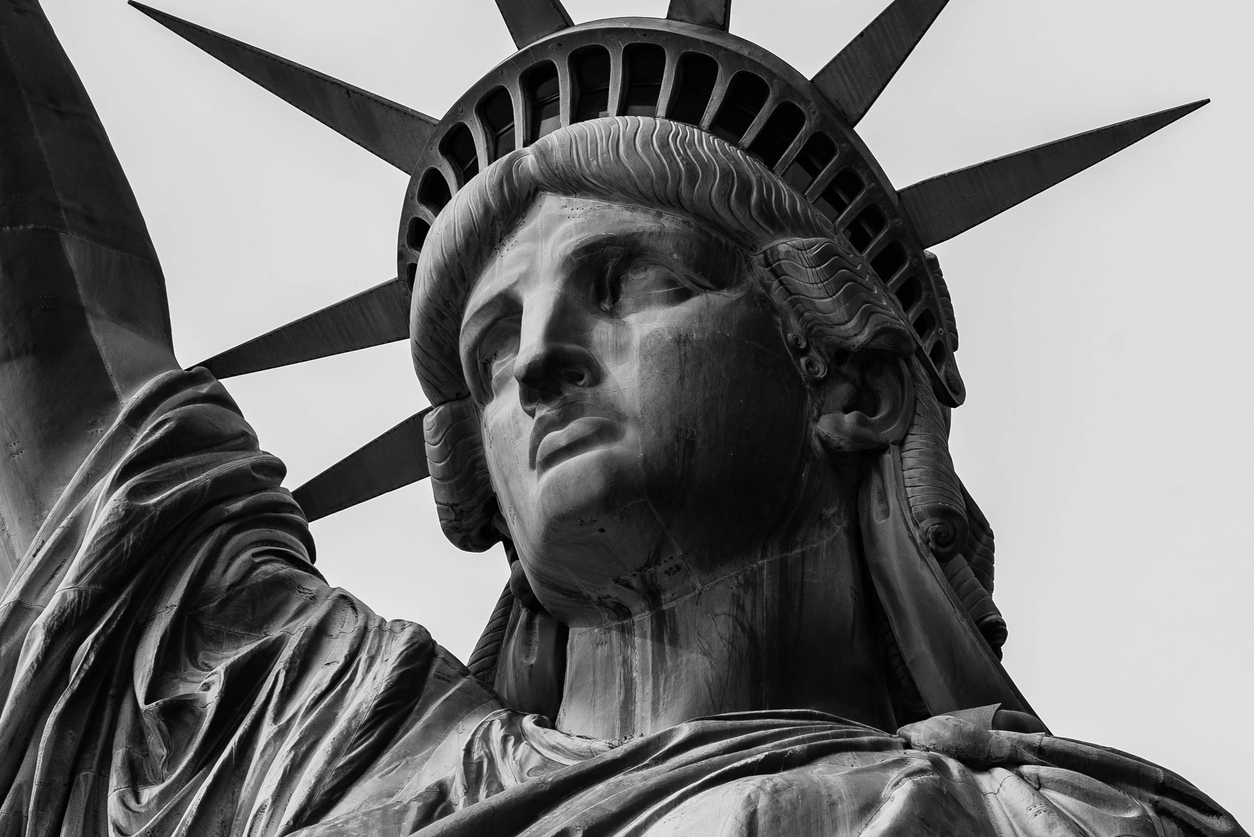
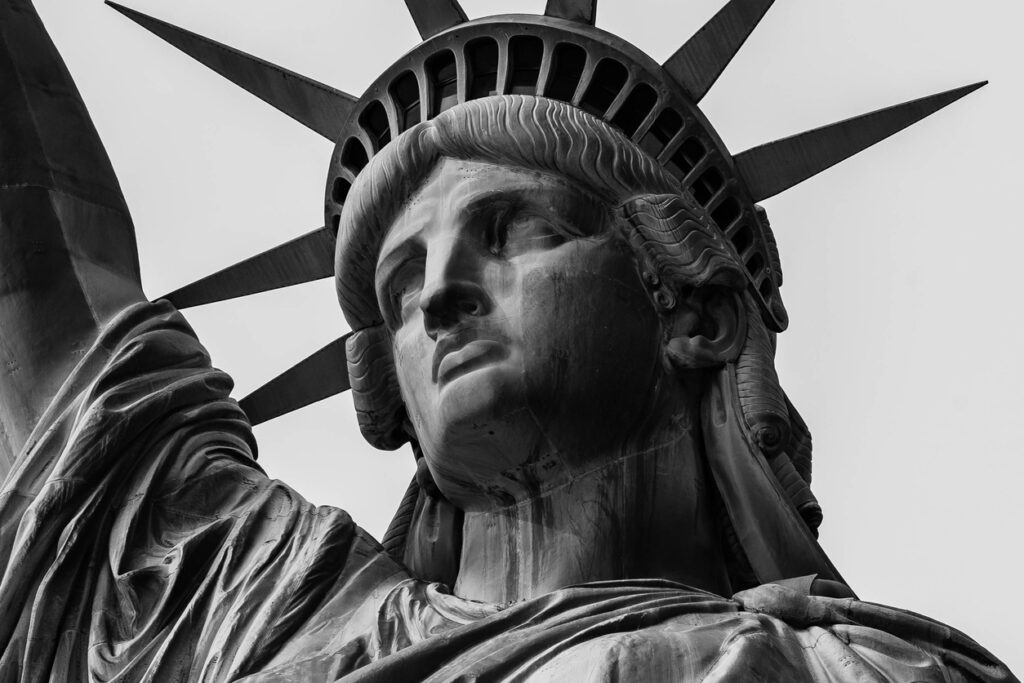
America has always been a refuge for the “huddled masses yearning to breathe free” as enshrined on the pedestal of the Statue of Liberty. Liberty is encoded into the DNA of America thanks to our history and the ideas that European settlers brought with them from the old world. It would take many trials and tribulations for freedom to truly crystallize however.
The relationship between the colonies and Britain worked for a time. It became completely one-sided though. Increasingly, the laws passed by Parliament served British interests at colonial expense. When colonists voiced their indignation they were dismissed or punished. They knew that things couldn’t continue as they were and they needed to be free.
Red skies in the morning sailor’s warning.
The rift was building for a decade — the Sugar Act of 1764, the Stamp Act of 1765, the Townshend Acts of 1767 — each a new tax imposed by a Parliament in which the colonies had no seat. The breaking point was the Tea Act of 1773, constructed to prop up the failing East India Company. It granted the Company a monopoly on tea sold in the colonies through hand-picked consignees, cutting colonial merchants out of the trade entirely. The act actually lowered the price of tea — and that was precisely the insult. Britain was betting that a bargain would make colonists swallow the principle they had resisted for ten years: taxation without representation.
The most consequential act of defiance came on December 16, 1773: the Boston Tea Party. The Sons of Liberty boarded three merchant ships — the Dartmouth, the Eleanor, and the Beaver — and dumped 342 chests of East India Company tea into Boston Harbor to protest the Tea Act. This led to draconian measures by Parliament: the Coercive Acts of 1774 closed Boston’s port until the tea was paid for and stripped Massachusetts of its self-government. Boston was throttled from multiple directions, and the towns that stood with it went hungry while the port stayed shut.
Our connection to Britain had hardened into a coercive, toxic stranglehold. Under the Quartering Act, British troops could be lodged in unoccupied buildings, barns, and inns at colonial expense. Dissenters were imprisoned in appalling conditions. The outcome of all of this was resentment and eventually the Revolutionary War.
A heavy price to be free.
The history leading to the Revolutionary War is a lesson in governance gone awry. The alliance between Parliament and the East India Company was state-backed monopoly power turned against the colonists. Britain inflicted economic hardship and violence on dissenters — and what the colonists realized is what the Declaration would soon make explicit: a government that rules without the consent of the governed forfeits its claim to rule.
The Founding Fathers were fixedly concerned with the new country they were forming with their pen strokes. The one thing they understood was that to be truly rid of the tyranny of Britain we needed to be better. To the Founding Fathers this required a limited government that served the people.
On July 4th, 1776, the Declaration of Independence was adopted by the Continental Congress :
“We hold these truths to be self-evident, that all men are created equal, that they are endowed by their Creator with certain unalienable rights, that among these are Life, Liberty and the pursuit of Happiness.”
Perhaps the most important words ever written in all of history? Pretty hard to top that. America was a newly declared nation — the republic and its Constitution were still more than a decade away — but it wasn’t the declaring alone that made it special. It was its unabashed proclamation of individual rights.
Ode to freedom
Let’s break this down line by line.
“We hold these truths to be self-evident, that all men are created equal.”
Some argue—fairly—that the language is not inclusive by modern standards. Even so, these words were revolutionary for their time and remain profound 250 years later. They assert something simple but powerful: every person, regardless of race, ethnicity, or creed, is born with equal moral worth and the same fundamental desire to live and thrive.
“that they are endowed by their Creator with certain unalienable rights”
This line expands the idea into something universal. It suggests that rights are not granted by governments but are inherent to our existence. If rights are truly unalienable, then violating them is not just unlawful—it is morally wrong, a breach of a deeper, universal standard of justice.
“that among these are Life, Liberty and the pursuit of Happiness.”
These rights define the minimum conditions for a free society. The right to life means no one may unjustly take it from you. Liberty ensures you are free to live without arbitrary control. The pursuit of happiness recognizes that each individual has the freedom to seek fulfillment on their own terms.
What does it mean to be free?
It is easy to speak about freedom in celebratory platitudes—especially around Independence Day. But liberty is more than a slogan. Being free does not mean doing whatever you want without consequence. It does not mean indulgence without limits. Rather, liberty is the ability to act on your beliefs, express your ideas, and live your life without fear of unjust punishment by the state. It means the government does not exist to box you into a predefined role for its own benefit, but to protect your ability to choose your own path.
A Radical Idea.
The Declaration of Independence introduced a fundamentally new kind of government. For most of recorded history, individual rights were minimal or nonexistent. At best, people received protection in exchange for loyalty or service—and even that protection was uncertain. Step out of line, and punishment could be swift and severe.
The Declaration rejected that model entirely. It asserted that the purpose of government is not to control individuals, but to protect their rights—rights that exist regardless of status, wealth, or usefulness to the state.
What “free” means for civilization and culture.
Those opening lines continue to shape American life in ways we often take for granted. Freedom of speech is one of the clearest examples. The First Amendment guarantees that you can express your views without fear of government punishment. For much of history, this was unheard of; dissent was often met with imprisonment or worse.
The same philosophical foundation supports principles like the presumption of innocence, property rights, and access to opportunity. The idea that the individual comes first—legally and morally—can be traced back to those few sentences written in 1776.
The reason America excels in so many realms is because people have been free to do so. We have not only produced great thinkers, but artists and innovators as well. When the human mind is unfettered all kinds of things become possible.
The Health of Lady Liberty Today.
She has taken a few blows in recent years. Public discourse increasingly feels less like rigorous debate and more like performance. Complex issues are often reduced to slogans, while meaningful disagreement is replaced by accusation or dismissal.
In recent years, there have also been troubling examples of targeted hostility, including incidents affecting Jewish communities in New York City and beyond. Acts of intimidation, vandalism, and exclusion—whether on campuses or in neighborhoods—run counter to the principles of liberty and equal protection the Declaration set out to defend. History shows that when such behavior is ignored or tolerated, the consequences can escalate quickly.
Closing Thoughts.
The Declaration of Independence remains one of the most important political documents ever written. It established a vision of government rooted in the protection of individual rights—a vision that continues to guide, challenge, and inspire.
The United States is not perfect, but it is the best the world has seen yet in many ways. Preserving those ideals requires more than celebration; it requires vigilance, debate, and a willingness to confront where we fall short.
Brooklynites.NYC will continue examining the health of liberty in the future. Thanks for reading and click back soon!
Related article:
https://brooklynites.nyc/brooklynites-nyc-lets-try-the-inexperienced-socialist/
Latest articles:
https://brooklynites.nyc/atwitter-over-the-new-york-bird-expo/
https://brooklynites.nyc/art-is-serious-play/
Sources
Read about the Declaration of Independence:
https://pacificlegal.org/the-declaration-of-independence-made-easy/
Read about the purpose of government:
https://billofrightsinstitute.org/essays/the-purpose-of-government/